From a Waitrose Food magazine’s editor joking about killing vegans one by one, to a Conservative shadow minister calling veganism extremist on the BBC and refusing to apologise, plant-based eating has become a cultural flashpoint. Why is veganism increasingly framed as part of the anti-woke backlash, and who benefits from turning a diet into a political weapon?
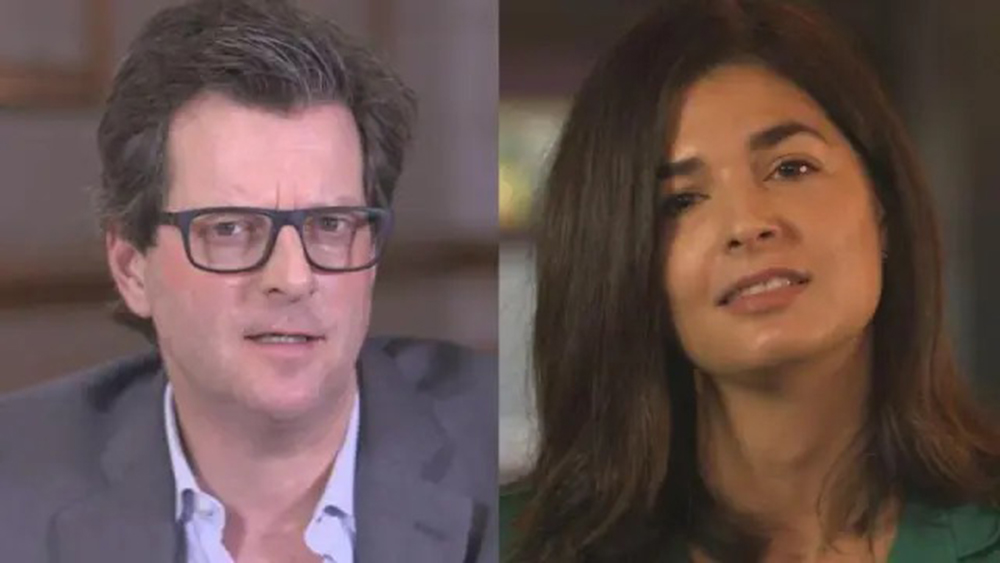
In October 2018, freelance food journalist Selene Nelson sent a routine pitch to William Sitwell, then editor of Waitrose Food magazine. She proposed a series on plant-based cooking. His reply, later published by BuzzFeed News, read, “How about a series on killing vegans, one by one. Ways to trap them? How to interrogate them properly? Force-feed them meat?” Sitwell resigned within days. Waitrose called his departure the proper move. Nelson, who had covered capital punishment and murder cases without receiving hostile responses, said she had “never seen anything like it.”
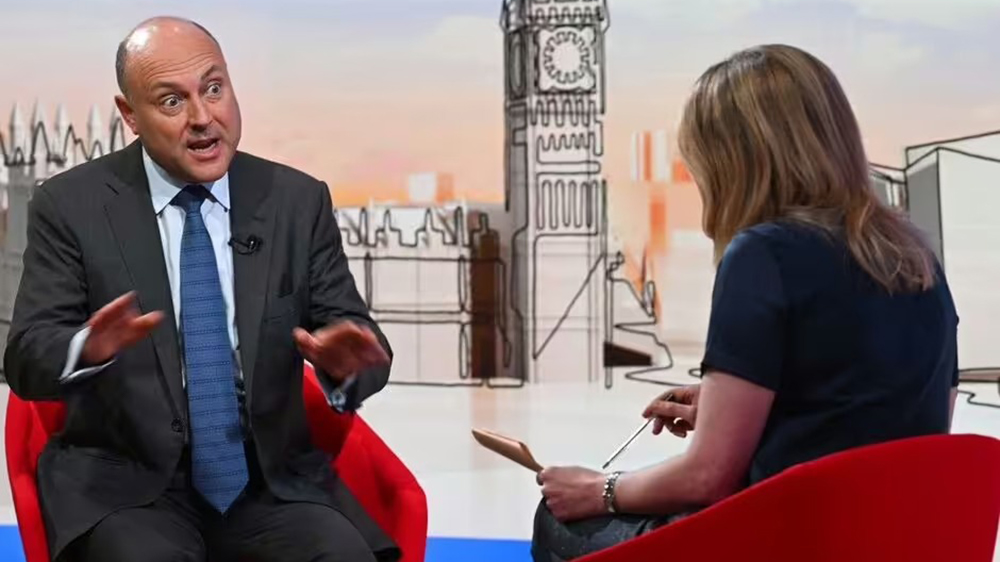
Six years on, that hostility has not stayed in private emails. It has moved into Parliament, onto prime-time television, and into government counter-terrorism training materials. In April 2025, shadow business secretary Andrew Griffith appeared on Sunday with Laura Kuenssberg on the BBC and called the Liberal Democrats “quite extremist”, citing their promotion of veganism as his evidence. Presenter Laura Kuenssberg looked visibly taken aback. “Not all of them are vegan,” Griffith clarified. “But too many.” That same year, the Vegan Society estimated 2.5 million adults in the UK now follow a plant-based diet. More than 700,000 people signed up to Veganuary in 2023 alone. This is not a fringe. And the louder that growth became, the more useful it appeared as a target.
Damian Watson, senior media officer at the Vegan Society, the UK’s leading advocacy organisation for plant-based living, was watching from home when Griffith made his remarks. “I was sitting there thinking, hang on, he has just called me an extremist,” he said. The Society wrote to Griffith the next morning, demanding an apology. He refused. They published the letter on their website. He then demanded its removal. They refused. The letter remains online, unanswered.
Watson points to a legal reality that makes the language especially striking. Veganism is a protected belief under the Equality Act 2010, carrying the same standing as religion. A 2019 employment tribunal, the landmark case of Jordi Casamitjana, established that ethical veganism qualifies as a philosophical belief deserving full legal protection.
Watson said Griffith’s remarks would have been unthinkable if directed at any other protected group. “Had Mr Griffith gone on air and said the Liberal Democrats support extremists who support Islam, he would never have dreamt of saying that. What exactly are you defending? Because when you stop and think what even is an anti-vegan protesting against,” Watson said.
The Griffith incident was not isolated. In 2024, the Vegan Society discovered that veganism had been included in NHS Prevent counter-terrorism training materials as a potential indicator of radicalisation. Teachers, social workers and nurses were being flagged as people who might commit violent acts simply because of what they chose to eat. Following the Society’s formal complaint, the reference was removed. Its presence in a programme designed to identify those at risk of terrorism illustrates how far the temperature had shifted from a private joke in an email.
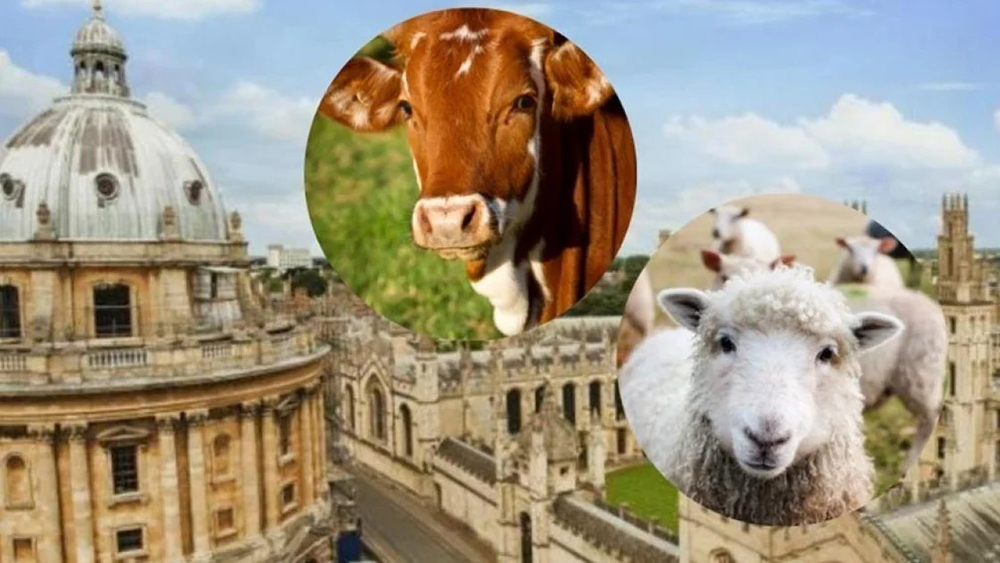
The institutional pushback stretches further. In November 2020, Oxford University’s Student Union passed a motion by a two-thirds majority to ban beef and lamb from campus catering outlets, citing the university’s carbon emission targets. The Countryside Alliance called it ‘a draconian ban’ and accused the union of showing a complete lack of appreciation for British farming. Mo Metcalf-Fisher of the Alliance said, “Students expect lectures in academia, not the diet they follow.” The motion drew national headlines and became one of the most prominent examples of veganism being reframed not as a dietary preference but as an act of cultural aggression.
If institutions provided the political flashpoints, television provided the spectacle. On 6 December 2022, Animal Rebellion activist Nathan McGovern was invited by Piers Morgan on TalkTV to discuss the group’s recent protests where he then went ahead and had a steak dinner delivered to his desk and ate it on camera. “Here’s my point,” Morgan said, chewing. “I love eating steak. I’m not going to stop eating steak. And the very last thing on earth that will stop me eating steak is people like you with your pasty faces running into our restaurants.” McGovern, who had come prepared with a Piers Morgan Vegan Bingo card, sat smiling. He had predicted every move.
Bobby Duffy, director of the Policy Institute at King’s College London, a research institute that has spent five years tracking British attitudes to culture war issues, has a structural explanation for why these moments keep happening. “The louder the outrage, the more clicks, the more engagement, the more revenue,” he said. Morgan’s confrontations with vegans were among the most-shared clips from his programme, circulating widely on social media each time. Anti-vegan content, for these platforms and personalities, was not a side interest. It was a revenue strategy. And to make that strategy work, veganism needed to be made into something bigger than a dinner plate; it needed to become a symbol.
But veganism did not arrive at this position alone. Professor Frank Furedi, sociologist at the University of Kent and author of extensive work on identity politics and culture wars, argues that it was bundled in alongside a loose cluster of other causes, trans rights, climate activism, and cycling, each of which had independently attracted the same hostility. “These movements move together. They have not got a name. It is an ideology without a name,” Furedi said.
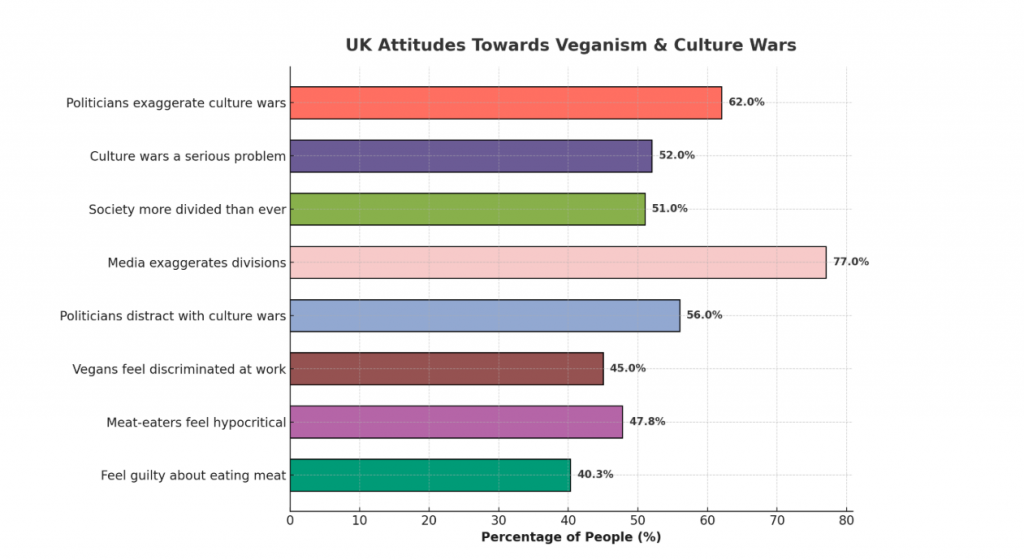
These findings align with official UK government data. According to the Office for National Statistics’ November 2024 Public Opinions and Social Trends survey, 77 per cent of Britons believe the media exaggerates divisions, while 62 per cent say politicians exaggerate culture wars as a political tactic. The data reveals the human cost of this manufactured conflict: 45 per cent of vegans report feeling discriminated against at work, while 47.8 per cent of meat-eaters acknowledge feeling hypocritical about their choices, and 40.3 per cent feel guilty about eating meat.
Furedi traces this mechanism to a political vacuum. “As political differences become less significant, cultural ones gain importance,” he said. “Everything gets dragged in. Tourism. Who would have imagined that going on holiday by aeroplane would become an issue? Anything can become an issue,” Furedi says.
The process is not random; causes become the target when they can be made to stand for an entire worldview. Veganism, with its associations with urban graduate culture, environmental concern and moral self-consciousness, offered an almost perfect target. The Vegan Society’s own data bears this out, where graduates are significantly more likely to be vegan than non-graduates, the diet is most prevalent in London, Brighton and Bristol, and 48 per cent of vegans cite the environment as a motivator. In the culture war playbook, that demographic profile translates directly into a caricature.
Furedi points to class as an underexamined dimension of the backlash. “I can always predict, as a sociologist, the way that people from different classes are likely to react. In the working class, people are much more likely to react defensively because they are proud to be British. Middle-class people have a different attitude. And that is really where class kicks in,” he said. A January 2025 Vegan Society survey, reported by Vegconomist, found that veganism in the UK maps almost precisely onto what is routinely dismissed as the metropolitan elite in culture war rhetoric. That overlap is not accidental, and politicians know it.
Politicians and media figures are not the only ones with an interest in keeping veganism polarising. Alex Lockwood is a filmmaker whose BAFTA-winning documentary 73 Cows was screened in the European Parliament in 2019. The film never once uses the word ‘vegan.’ Lockwood watched commercial interests operate up close throughout its making and release.
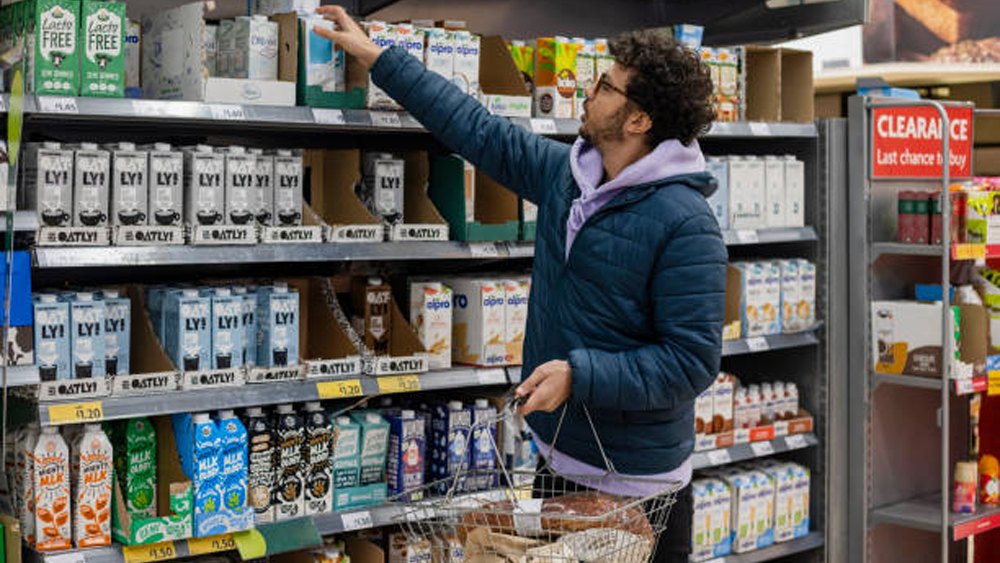
“The food industries sought to turn it into a culture war because if they do not, they feel like their market is just going to get eaten into,” Lockwood says. “It’s their way of trying to make veganism sound silly, to make it into a personal thing. They’ve put a lot of money into negative marketing and lobbying.” One visible result is the EU regulations passed in 2021, which restrict what language plant-based products can use on their packaging; producers of oat milk and vegan burgers cannot use terms such as ‘buttery’ or ‘burger-style.’
The media amplifies that effort. Watson points to a 2023 report from the Scientific Advisory Committee on Nutrition, which concluded that unsweetened, fortified plant milk is a safe alternative to dairy for children over one year old. The newspaper headlines that followed warned instead that plant milk was dangerous for children, amplifying the caveats and discarding the conclusion. The Vegan Society wrote to editors. No corrections came. “They cherry-picked the headline that suited their agenda,” Watson said. “Two opposing articles do not make one consensus.”
The story is not simply one of innocent vegans persecuted by bad-faith politicians. Furedi is direct about the role veganism itself has played in building the fire it is now caught in. “It is no longer about what you eat, but about moral choices, about values. For a lot of people in England, being vegan is like a badge of honour that says I am unlike these people, I am really superior to them. That moral charge, he argues, is precisely what invites the pushback it then receives,” he said.
Lockwood encountered this dynamic in every conversation around his film. “When you say that you are vegan to somebody who is not, and they ask you why, it is hard to do that without telling them that I think what you are doing is wrong.” The accusation lands even when it is not intended. People feel judged, and when people feel judged, they get defensive,” he said.
“Anti-veganism is a reaction to the fact that the vegan lobby has been very active in calling into question other people’s diets. If you are told that the food you eat is somehow making you into a lesser person, you can either ignore it or say who gave you the moral authority to tell me what I can and cannot eat,” Furedi said.
Yet a 2024 Vegan Society survey of more than 10,000 people found the top reasons for going plant-based are animal welfare, personal health and the environment.
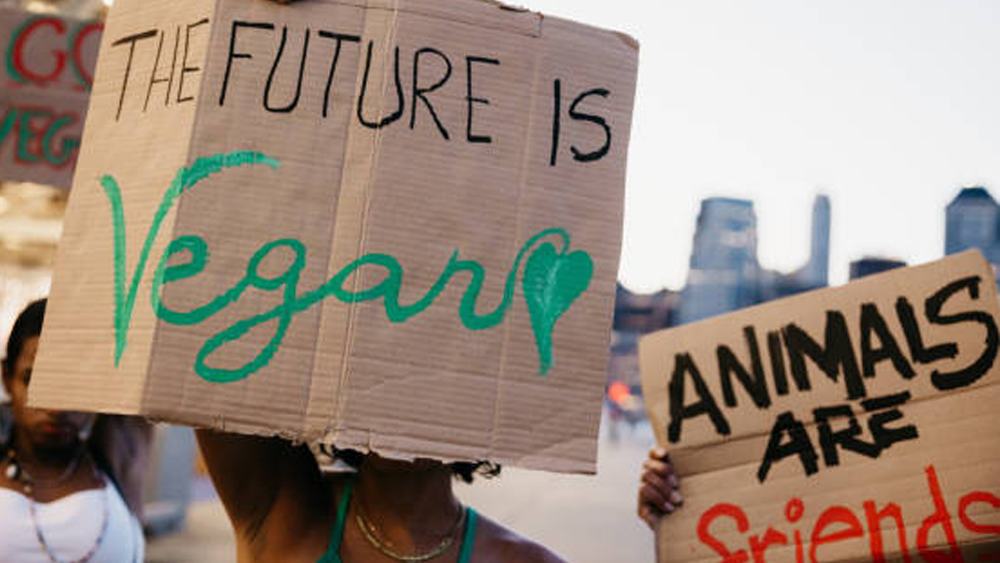
A 2022 study published in Appetite found that the overwhelming majority of new vegans cited personal health and animal ethics as their primary motivations, not activism, not political identity. Most people who stop eating meat are not declaring a culture war. Others declared it for them. Furedi’s prescription on this is blunt. “If being vegan was just your diet, if it defined how you ate rather than being an identity you wanted to promote, then there would be no conflict whatsoever. Nobody would care. It would be depoliticised quite easily.”
Once an issue enters the culture war, it starts being everything but the issue. It is how the culture war works. “The way culture wars are perceived by individuals in the UK, it’s so different, especially the right wing and the left wing that it’s like two opposite worlds. But despite the topic being the same thing, getting it across to the audience is like, it’s just so different. It’s highly polarized and it’s two different worlds. They don’t talk to each other. They don’t talk to people like themselves,” Furedi said.
For people like Watson, those worlds collided when a shadow minister called him an extremist on live television, and since then, he has one question he would like to put to every politician who has called veganism extremist, every columnist who has mocked it, every algorithm that has boosted the outrage.
“Do you like animal cruelty?” he said. “That’s what I’d like to ask people who disagree with veganism. What exactly are you defending? Because when you actually stop and think, what is an anti-vegan protesting against?”
It is the one answer that culture war is not designed to give. Because giving it honestly would end the argument. And the argument, for some people, is far too valuable to end.